
The purpose of this exchange is to increase the technical and economic sustainability of micro-hydro projects.
By loading the map you accept the privacy policy of Google.
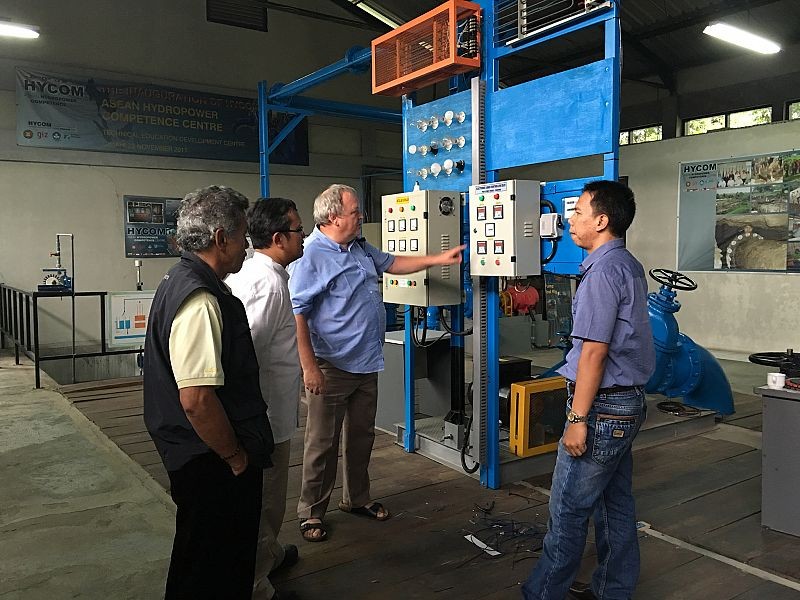 When comparing inherent aspects of different mini-grid technologies, micro-hydropower (MHP) has clear advantages: (a) far lower investment costs and levelized cost of electricity; (b) no need for battery storage; and (c) the reliable technology can be procured locally.
These advantages make MHP the most economically viable mini-grid technology for rural communities with agricultural-based productive end uses. However, most MHP projects generate excess electricity and operate at low plant load factors, which also leads to low levels of feed collection and to financial difficulties for many MHP projects. Most could achieve greater economic impact by technically and socially integrating quality technology that supports high productive end use.
The purpose of this exchange is to increase the technical and economic sustainability of micro-hydro projects. To that aim, a set of three knowledge-sharing tools will be developed to collect and systematise knowledge and experience from micro-hydro practitioners from South and South-East Asia. The tools will cover the following topics:
1. The Micro-Grid Code
This guideline document will set standards for environmental impact, civil construction, transmission and distribution, and electro-mechanical hardware.
2. Centralised Micro-Hydro Technology Database
This live database will make information about MHP suppliers accessible in all HPNET countries, including details that help to determine the standard of quality.
3. Training Module: Increasing MHP Load Factor
a. Simulation tools to help village stakeholders understand the need for the electronic load controller;
b. Indicator and monitoring device that assists households and developers to analyse and optimise their MHP usage;
c. Local workshop to test and refine the tools.
When comparing inherent aspects of different mini-grid technologies, micro-hydropower (MHP) has clear advantages: (a) far lower investment costs and levelized cost of electricity; (b) no need for battery storage; and (c) the reliable technology can be procured locally.
These advantages make MHP the most economically viable mini-grid technology for rural communities with agricultural-based productive end uses. However, most MHP projects generate excess electricity and operate at low plant load factors, which also leads to low levels of feed collection and to financial difficulties for many MHP projects. Most could achieve greater economic impact by technically and socially integrating quality technology that supports high productive end use.
The purpose of this exchange is to increase the technical and economic sustainability of micro-hydro projects. To that aim, a set of three knowledge-sharing tools will be developed to collect and systematise knowledge and experience from micro-hydro practitioners from South and South-East Asia. The tools will cover the following topics:
1. The Micro-Grid Code
This guideline document will set standards for environmental impact, civil construction, transmission and distribution, and electro-mechanical hardware.
2. Centralised Micro-Hydro Technology Database
This live database will make information about MHP suppliers accessible in all HPNET countries, including details that help to determine the standard of quality.
3. Training Module: Increasing MHP Load Factor
a. Simulation tools to help village stakeholders understand the need for the electronic load controller;
b. Indicator and monitoring device that assists households and developers to analyse and optimise their MHP usage;
c. Local workshop to test and refine the tools.
Projects with same technology
Hybridisation of an Existing Micro Hydro Plant with Solar PV and Integration with the Grid
The project aims to integrate an existing micro hydro power unit into the national grid to prevent it from becoming non-operational and to demonstrate the potential of a grid-connected micro hydro solar hybrid system. Solar power will ensure the reliability of export of power to the grid during dry season while micro hydro becomes partly functional.
Promoting the Long-Term Use of Micro-Hydro Systems by Providing Energy to Rural Enterprises in Nepal and India
This projects aim was to ensure the sustained operation of existing micro-hydro plants through rehabilitation, optimisation, increased financial stability, capacity-building and management support
Projects in same country
Smart Grids for Small Grids
This project developed an open source load management system for community-based renewable energy systems.
Exchange: Strengthening Open-Source ELC Development in Southeast Asia
(1) to continue to build and strengthen local capacities around ELC installation and development; and (2) to further improve the open-source ELC design